Sai River
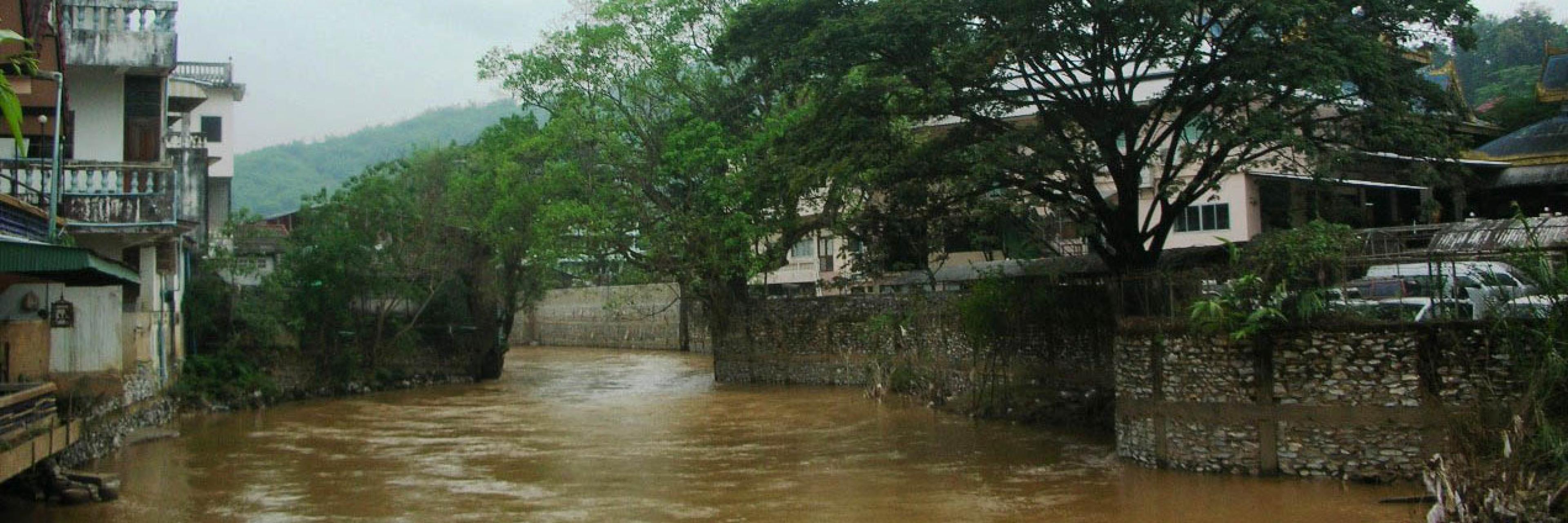
The Sai River basin, situated along the Mae Sai–Tachileik border between Thailand and Myanmar, has experienced a series of interconnected disruptions that have severely impacted both the ecosystem and local communities. The most devastating event occurred in September 2014, when Typhoon Yangi brought intense rainfall and caused widespread flooding throughout the region. Homes, farmlands, and key infrastructure were damaged, while mudslides and heavy sediment deposition further altered riverbanks.
Rationale
The large-scale deforestation in the upstream mountainous areas of Shan State further diminished the land’s natural water-retention capacity. This environmental degradation has contributed to repeated flooding in downstream communities in Mae Sai District, while accelerating riverbank erosion. At the same time, mining activities and land degradation in the upper catchment have introduced heavy metals—including arsenic, lead, and mercury—into the river system. These pollutants have compromised water quality and pose serious risks to human health, agriculture, and local fisheries, which are central to community livelihoods.
Extensive deforestation in the upstream mountainous areas of Shan State has weakened the land’s natural water-retention capacity, increasing the frequency and intensity of downstream flooding in Mae Sai District and accelerating riverbank erosion. At the same time, illegal mining activities and land degradation in the upper catchment have introduced heavy metals—such as arsenic, lead, and mercury—into the river system. These contaminants threaten water quality and pose serious risks to human health, agriculture, and fisheries, all of which underpin local livelihoods.
The combined effects of flooding, deforestation, and heavy metal contamination have produced a complex environmental and socio-economic crisis. Communities now grapple with recurring physical and economic losses, heightened public health risks, and the psychological strain associated with deteriorating and uncertain living conditions.
Strategy
The proposed Sai River revitalization project is significant because it addresses a complex set of ecological, social, and governance challenges that are deeply interconnected in this transboundary watershed. Locally, communities along the Sai River in Mae Sai (Thailand) and Tachileik (Myanmar) face recurring flooding, deforestation in upstream areas, and heavy metal contamination linked to land-use changes and economic activities. These impacts disproportionately affect vulnerable groups, including informal settlements, children, and older adults. By integrating scientific assessments with community knowledge, the project strengthens local capacity to understand risks, co-produce data, and design solutions that reflect lived realities. This approach enhances environmental justice by ensuring marginalized voices shape decisions about resource management and public health.
Regionally and globally, the project offers a transferable model for revitalization in politically sensitive border areas where ecological systems are shared but governance structures are fragmented. Our participatory, multi-scalar strategy demonstrates how co-management frameworks can bridge gaps between local administrations, civil society, and scientific institutions. The project’s focus on citizen science—especially in water quality monitoring, health surveillance, and participatory mapping—shows how community-generated evidence can complement formal scientific methods to create more adaptive, resilient, and legitimate governance arrangements.
Others can learn from the way this case links ecological restoration with social resilience. Rather than treating flooding, contamination, and forest loss as isolated problems, the project treats them as manifestations of wider socio-environmental disruption. The methodology emphasizes long-term relationship building with communities, iterative learning, and transparent data-sharing mechanisms. Importantly, the revitalization framework is designed to be flexible and scalable, providing a blueprint for other transboundary river basins facing similar environmental pressures and inequalities. By demonstrating how co-created knowledge can drive transformative governance, the project contributes lessons relevant to climate adaptation, disaster risk reduction, and community-led environmental stewardship.
Methods
This case study proposes a citizen science–based approach to help address these challenges by engaging local residents in water-quality monitoring, data collection, and collaborative learning. The project also supports communities in developing locally driven resilience and development plans to be submitted to their respective administrative organizations. By integrating scientific insights with community-led planning, the initiative seeks to promote sustainable revitalization strategies that strengthen local governance, build resilience, and foster collective stewardship of this vital transboundary river.