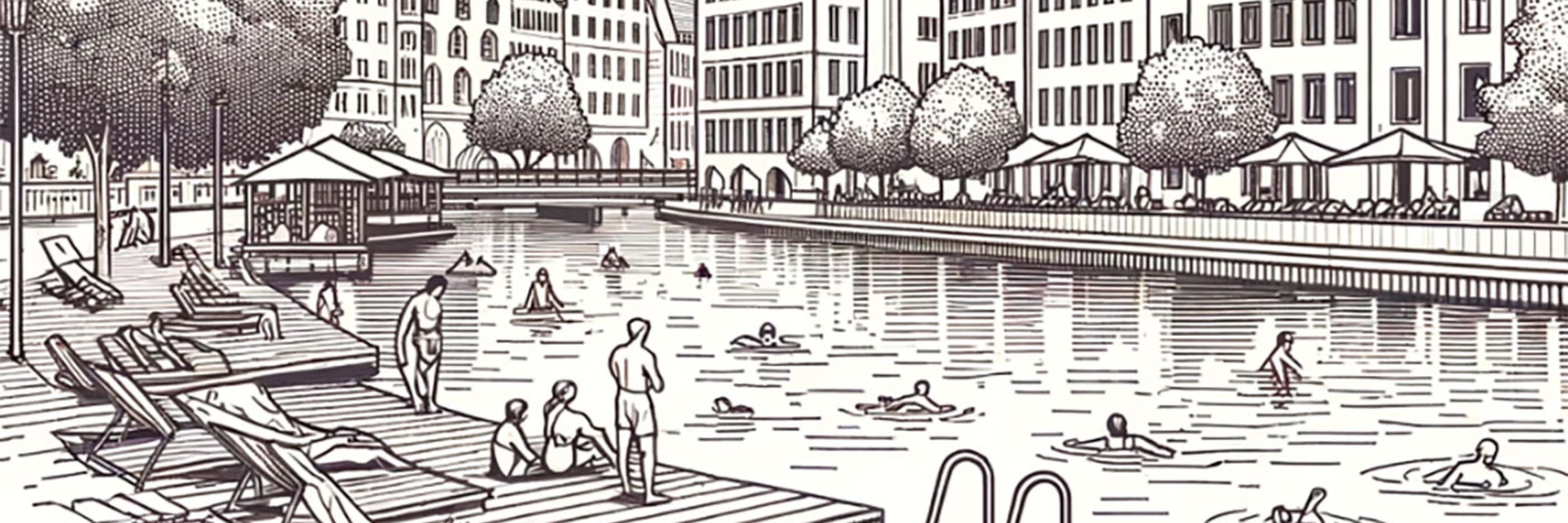
Urban river bathing in Europe, with Lyon (France) as an example
Our Studio "Baignades Urbaines" at the Laboratory LabEx IMU (Intelligences des Mondes Urbains) at the University of Lyon aims to investigate the future trends and challenges of urban river bathing/swimming in metropolitan areas such as Lyon, targeting the years 2030 and 2050. This is achieved by taking an interdisciplinary and transdisciplinary approach that integrates socio-cultural contexts, urban growth, socio-spatial disparities, climate change, and the dynamic relationship between humans and nature.
We developed the first transdisciplinary study on sustainable urban river bathing development in Europe:
Cao, Y., Navratil, O., Honegger, A., & Rivière, N. (2026). Urban river bathing in selected European cities: Evolution, typology, management issues, and sustainability challenges. Landscape and Urban Planning, 269, 105596. https://doi.org/10.1016/j.landurbplan.2026.105596
Cao, Y., Barbiero, P., Briat, F., Camenen, B., Chambat, F., Chiu, V., Cournoyer, B., Delavenne, M., Dewals, B., Epain, M., Honegger, A., Le Coz, J., Lipeme Kouyi, G., Maghakian, C., Navratil, O., Pillonel, O., Porcherie, M., Puijalon, S., Riviere, N., Thomas, M. F., Trillat, R., Volatier, L., & Zanot, J. M. (2025). Reimagining Urban River Bathing in Europe: A Multisectoral and Interdisciplinary Dive into Lyon’s Rivers (France). River Research and Applications, 42(1), 224-241. https://doi.org/10.1002/rra.70050
Balmaseda-Domínguez, A., & Cao, Y. (2026). Reviving urban swimming in Europe: Navigating complexity between natural and cultural heritage. Blue Papers, 5(2), 49-60. https://doi.org/10.58981/bluepapers.2026.2.19
Maghakian, C., Navratil, O., Zanot, J. M., Rivière, N., & Honegger, A. (2024). Drowning incidents in urban rivers: An underestimated issue with future challenges in need of an interdisciplinary database to characterise its epidemiology. Environmental Challenges, 14, 100822. https://doi.org/10.1016/j.envc.2023.100822
I.S. Rivers International Conference 2025 (Lyon, France) - Session C7 Baignade en rivière urbaine: https://www.assograie.org/isrivers/2025/02/26/session-c7-baignade-en-riviere-urbaine/
Rationale
Bathing and/or swimming in rivers has a long-standing history in various cultures worldwide. Today, with the advent of river restoration projects in cities aimed at revitalizing rivers and their riverfronts into multifunctional green and blue spaces, a new movement has emerged in European cities advocating for the right to bathe and/or swim in natural rivers. This trend not only seeks new ways to mitigate climate change impacts, particularly urban heat islands, but also responds to a growing demand for natural interaction benefiting the well-being of city residents, especially in the aftermath of the COVID-19 pandemic.
Bathing/swimming in urban rivers not only enhances the rivers' recreational use, thereby highlighting their 'social connectivity', but also encourages a shift towards sustainable river management, emphasizing the importance of inclusiveness and social-ecological fairness. In support of this, the EU's Bathing Water Directive (2006/7/EC) serves as a legal framework to improve the water quality in natural water bodies across Europe. As a result, some European cities have initiated a series of pilot projects to facilitate regulated river bathing. Examples include the Badeschiff in Berlin, a floating public swimming pool in the river Spree, harbour baths and beaches in Copenhagen, and plans for the Seine River in Paris to host Olympic swimming events in 2024, with public bathing sites opening in 2025.
Despite these advancements, swimming/bathing in rivers remains prohibited in most European cities, although the practice has seen an increase. There are multiple challenges to be addressed, including water quality and human health concerns, the ecological integrity of rivers, drowning risks, and management and governance issues. These obstacles underscore the need for holistic strategies that balance recreational use with environmental stewardship, equality, and public safety, ensuring the revitalization of bathing/swimming in urban rivers.
Strategy
🌊 Reimagining Urban River Bathing: Lessons from Lyon (France)
How can cities reclaim their rivers as vibrant, swimmable public spaces?
Cao, Y., Barbier, R., Baron, C., Barreteau, O., Besenval, A., Camproux Duffrene, M. P., Dufour, S., Fernandez, S., Germaine, M. A., Guerrin, J., Hervé-Fournereau, N., Imfeld, G., Laborie, N., Marchand, A., Richard, S., Wantzen, K. M., & Zingraff-Hamed, A. (2025). Commoning water and integrating non-human entities into water governance in Europe. Ambio, https://doi.org/10.1007/s13280-025-02286-7
A new open-access study published in River Research and Applications explores how Lyon is doing just that—through a bold, interdisciplinary approach to urban river bathing. The research highlights how collaboration between engineers, ecologists, urban planners, public health experts, and local communities is key to transforming rivers into safe, inclusive, and sustainable spaces for recreation and connection.
At Swimmable Cities, we’re inspired by this work and its alignment with our mission: to make urban waters accessible, clean, and central to city life. The Métropole de Lyon case shows that with the right vision and partnerships, even heavily modified urban rivers can become places of joy, health, and ecological renewal.
Methods
We explore the revival of urban river bathing across 11 European cities 🇪🇺, a worldwide movement to "make our rivers swimmable again":
Cao, Y., Navratil, O., Honegger, A., & Rivière, N. (2026). Urban river bathing in selected European cities: Evolution, typology, management issues, and sustainability challenges. Landscape and Urban Planning, 269, 105596. https://doi.org/10.1016/j.landurbplan.2026.105596
What did we find? 🔍
➡️ A design typology serving for urban planning 📝:
- Designated river pools: structured, regulated, often led by public authorities
- Free river bathing zones: "swim on your own risks", often preferred by grassroots initiatives
➡️ Persistent management challenges 💧:
- Microbial water quality: aligned with EU directives. New near-real-time monitoring technologies are making water assessment faster and more reliable, yet effective public communication is still needed.
- Safety protocols: “Every number in river-drowning statistics matters.” European pioneers structure drowning preventions around 4 pillars: perception, access, supervision, and rescue.
➡️ Rivers are not just playgrounds, they’re living ecosystems 🏞️. Reclaiming public rivers reconnects people with nature, yet too much recreation may also pressure biodiversity. How do we swim with the river, not just in it?
➡️ Toward sustainable bathing development 🌡️:
- Urban river bathing can contribute to urban cooling, climate adaptation, and public health, while reshaping collective relationships with waterways. Moving beyond 'usage,' rivers should also drive more inclusive transformations in environmental governance. The future lies in bridging the gap between top-down management and bottom-up activism.
This interdisciplinary study is a first step toward reimagining rivers not just as infrastructure or resources, but as shared commons where ecological, social, and cultural values shape how we live with water. 🌍
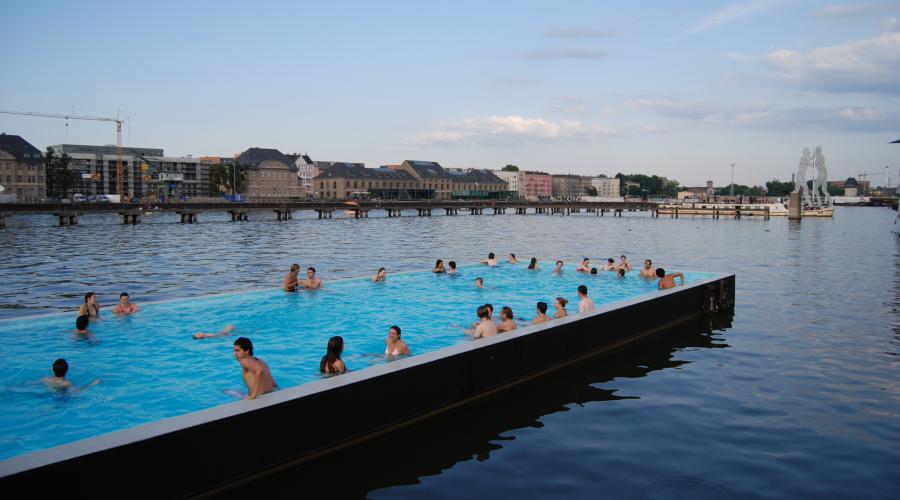
Badeschiff, Berlin
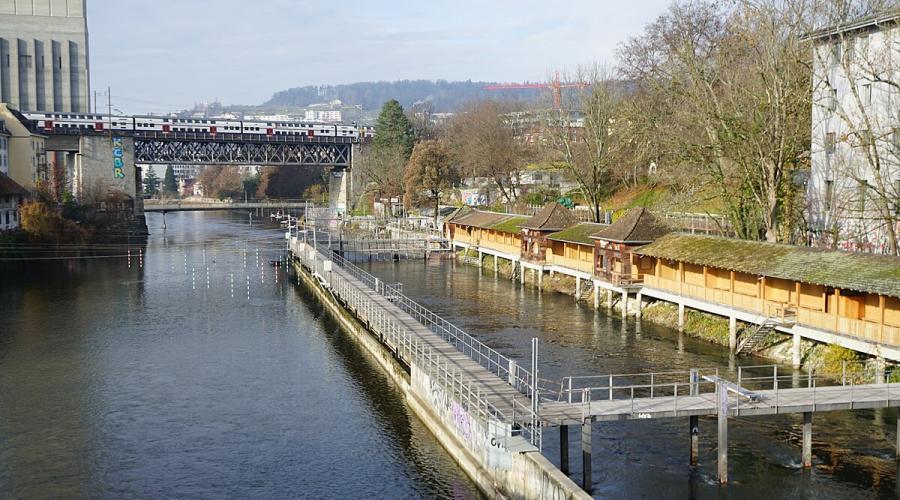
The River Limmat in Zürich-Wipkingen with the public bath Unterer Letten and the railway bridge
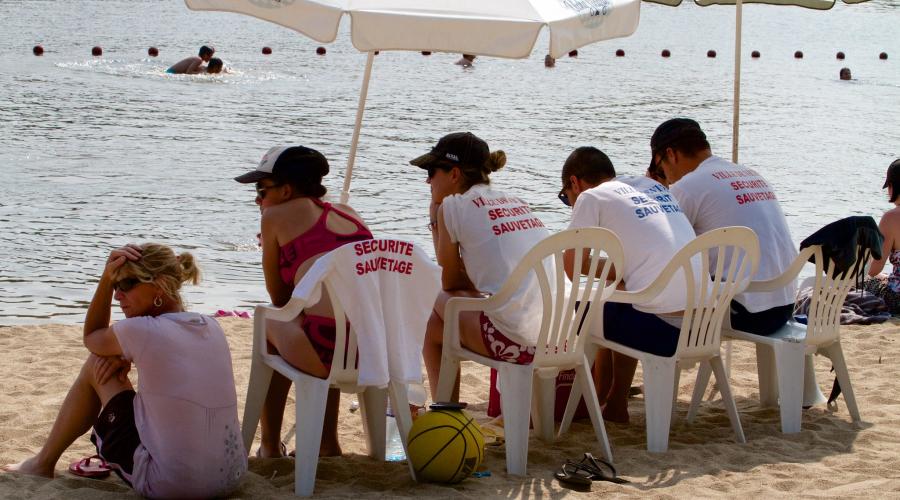
Baywatchers in the summer river beach, Vichy, France