Urban Rivers and Waterways in the Anthropocene
The RCN is pleased to announce the conference Urban Rivers and Waterways in the Anthropocene held in collaboration with the University of Bergamo (Italy).
18 - 21 May 2027 | University of Bergamo
An early acceptance program (EAP) is now open for RCN team members who are seeking institutional funding to present at the conference and who require advance notification of acceptance. RCN team members may submit their EAP proposals between 30 October and 30 November 2026. Please send them to urbanwaterways@unibg.it - using “EAP Bergamo 2027” as the email subject line.
Submissions should include the presenter’s name, institutional affiliation, paper title, keywords and an abstract of no more than 250 words. Proposals will be reviewed on a rolling basis, with decisions communicated within 30 days of receipt and no later than 30 December 2026.
Download the Call for Papers PDF for detailed information.
Any queries can be addressed to phayward21c@gmail.com (RCN member on conference organising committee).
Conference
How are urban rivers and waterways being transformed in the Anthropocene? How do environmental change, infrastructures, cultural practices and different ways of knowing and living with water shape the present and future of urban waterscapes?
The conference will provide an opportunity for researchers from a wide range of disciplinary backgrounds, together with policy makers, practitioners and community and environmental activists, to explore key questions concerning urban rivers and waterways, including lagoon and wetland environments connected to urban and peri-urban areas, in the Anthropocene.
Bringing together perspectives from across the humanities, social sciences and environmental studies, the conference will encourage dialogue on the changing relationships between water, urban environments and the communities that inhabit them.
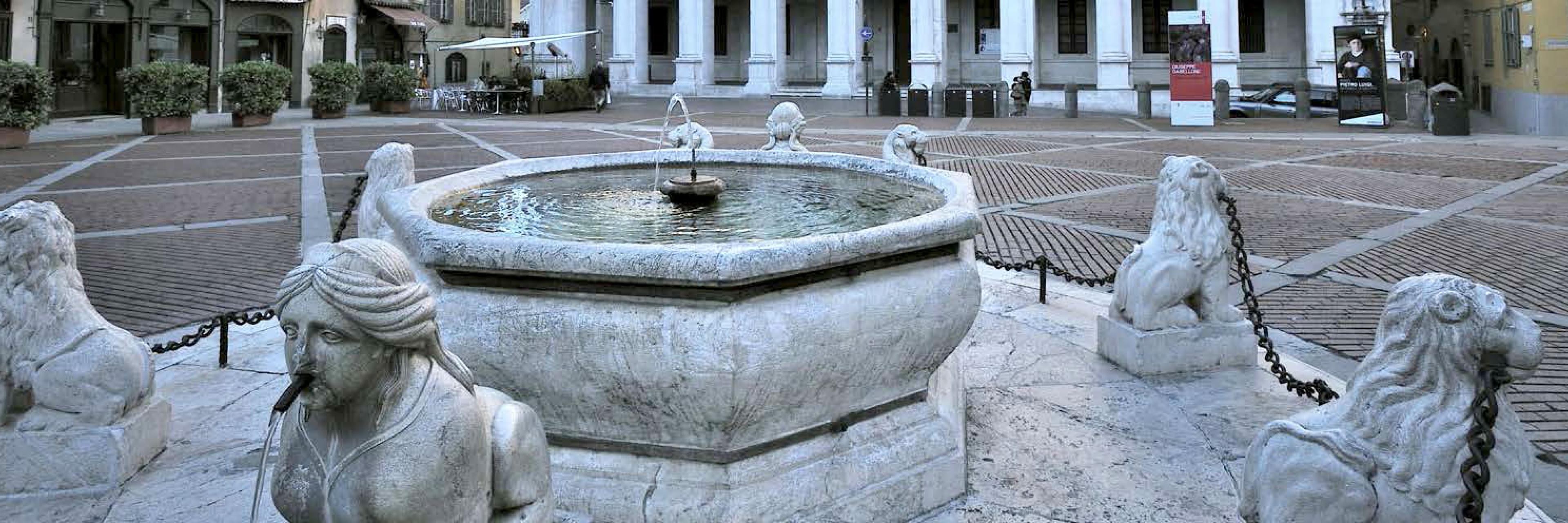
The conference will take place in Bergamo Alta, the historic upper town of Bergamo, offering an opportunity to explore a distinctive urban setting and reflect on the historical and contemporary relationships between cities and water.
Conference Scientific Committee (Papers and Panels)
❙ Prof. Federica Burini (University of Bergamo)
❙ Prof. Philip Hayward (University of British Columbia)
❙ Prof. Maarja Kaaristo (Tallinn University and Manchester Metropolitan University)
❙ Prof. Rita Vianello (University of Bergamo)
❙ Prof. Francesco Visentin (University of Udine)
Keynote Speakers
The conference will feature keynotes from:
❙ Prof. Kuei-Hsien Liao (National Taipei University, Taiwan)
❙ Prof. Philip Hayward (University of British Columbia, Canada)
Topics
Proposals for panels and/or individual papers for the parallel strands are welcome on the following topics:
❙ The impact of climate change on urban waterways and waterscapes
❙ The burial of rivers and canals in urban centres
❙ The ‘cultural traces’ of buried waterways in urban centres
❙ The ‘daylighting’ of urban rivers
❙ Gentrification processes arising from developments around urban waterways
❙ The mitigation of urban heat islands through blue-green spaces
❙ Community involvement and activism in urban river planning and modification
❙ Creative engagements with and/or representations of any of the above
❙ Urban and peri-urban lagoons, wetlands and other aquatic environments
❙ Flood protection, water infrastructures and adaptation to environmental change
❙ Cultural heritage, local knowledge and everyday practices associated with urban waterways and waterscapes
❙ Socio-ecological relations, more-than-human agency and emerging debates on the rights of rivers and urban waterways
The conference will commence with an early evening reception on May 18th. There will be two full days of panels and papers on May 19th and 20th and a study trip in the city and nearby locations on May 21 st.
Individual paper proposals should include an abstract of no more than 250 words. Panel proposals should include a 100-word summary of the panel theme, together with an abstract of no more than 250 words for each paper included in the panel.