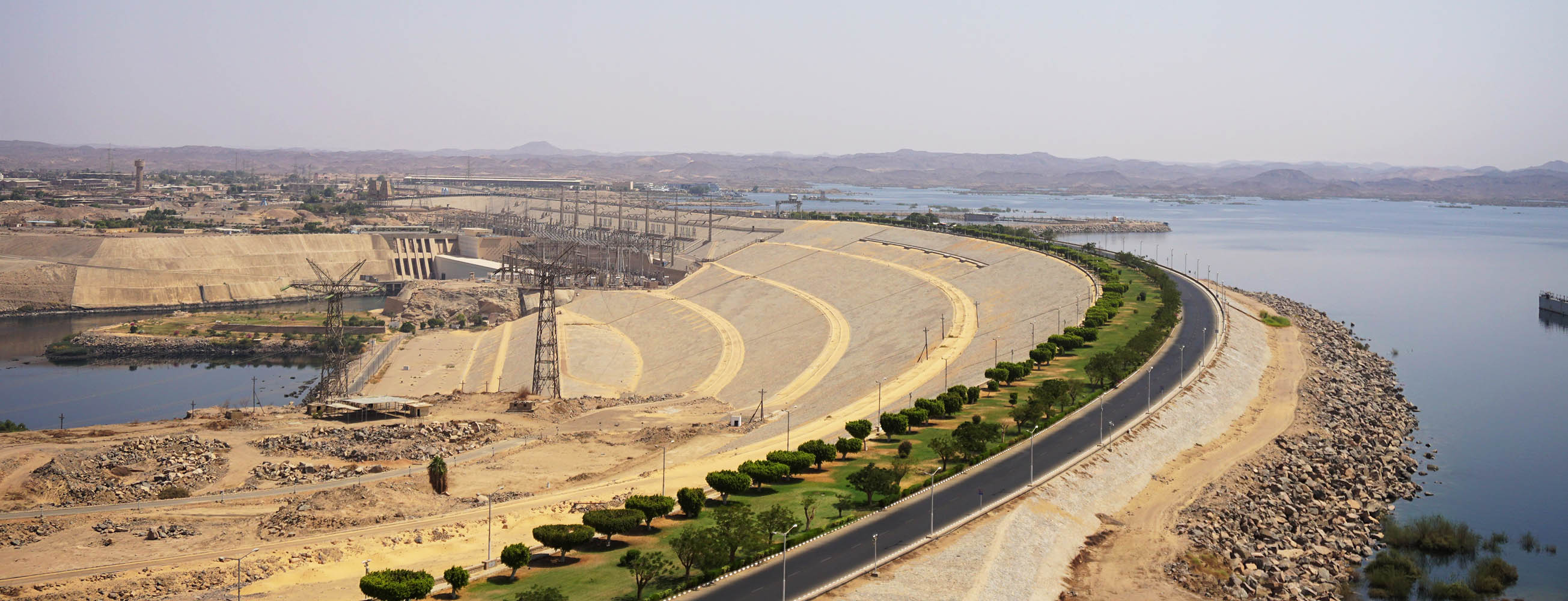
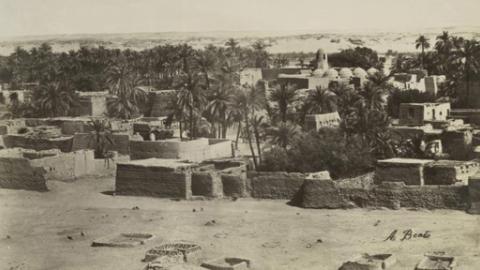
The Aswan High Dam and the socio-cultural transformation of Nubia: Displacement, memory, and the politics of heritage
In 1954, Egyptian President Gamal Abdel Nasser announced that if the Nubian communities practised patience, the province of Nubia and the city of Aswan would be the primary beneficiaries of the revolutionary Aswan High Dam (AHD). Framed as the master design of Egypt’s post-colonial modernisation, industrial growth, and Arab nationalism, the Dam successfully protected millions from catastrophic droughts and floods during the 1970s and 1980s, generated affordable hydroelectric power, and added 6 to 6.5 billion cubic meters of water to Egypt's national share. Yet, this triumph of engineering and nation-building triggered severe, multidimensional socio-cultural losses for the indigenous Nubian communities. The creation of Lake Nasser flooded ancestral lands, forcing the final displacement (Tahjir) of an estimated 100,000 Nubians from both Egypt and Sudan. This paper analyses the historical trauma of these dislocations across four separate instances, focusing on the 1963–1964 forced relocation to New Nubia. By synthesising ethnographic data, architectural typologies, and historical records, this study evaluates the transformation of the traditional Nubian house (nōg) as a social organisation, and the erosion of communal structures (nujūʿ), the gendered impacts of displacement on women, and the ongoing politics of heritage. Ultimately, the paper critiques the traditional development discourse that treats human displacement as an unavoidable collateral expense, highlighting the enduring agency, contemporary transformations, and cultural resilience of the Nubian-Egyptian community.
Climate switch
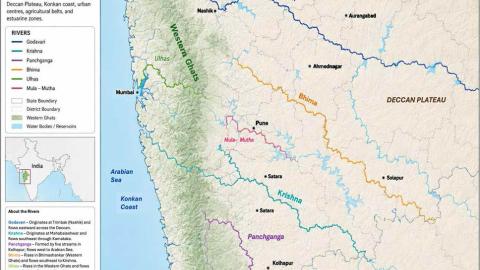
Urban river rejuvenation is often promoted as a way to address climate stress, ecological decline, and fragmented urban growth. Yet most programs focus primarily on technical engineering solutions such as flood control, riverfront beautification, and infrastructure upgrades. This approach often overlooks or undermines the livelihoods and institutions connected to river environments. This paper argues that building urban river resilience requires more than just ecological restoration. It also means rebuilding the social and institutional relationships that shape how rivers are managed, valued, and cared for. Using examples from Western Maharashtra, the study introduces a Livelihood-Centred Socio-Ecological River Governance (LCSERG) framework. This framework draws on political ecology, socio-ecological systems theory, commons-based governance, ecological justice, and institutional analysis. It sees river-dependent livelihoods not just as recipients of restoration, but as key advocates and long-term agents for fair and accountable actions. In this view, rivers are socio-ecological infrastructures, and their resilience depends on the connections between ecosystems, institutions, and livelihoods.
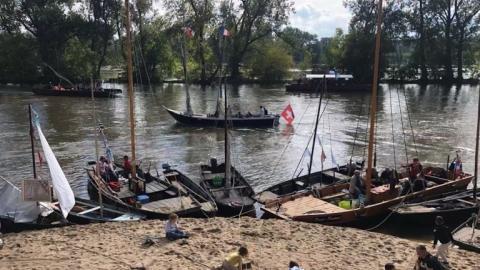
The Rights of Rivers Movement in France: Tavignanu River Rights Declaration (Corsica) and Loire Parliament
The global Rights of Nature (RoN) movement has emerged as a response to anthropocentric environmental governance by recognising rivers and other ecosystems as rights-bearing subjects. In Europe, the RoN movement is rapidly expanding, yet it continues to face persistent structural challenges in articulating with established legal and policy frameworks. This article examines the development of RoN in France through two pioneering case studies: the Parlement de Loire (PdL), launched in 2019 as France’s earliest RoN initiative and inspired by Bruno Latour's concept of the Parliament of Things, and the Tavignanu River Rights Declaration in Corsica, the first formal RoN recognition in France. Our analysis shows that the PdL uses art-based transdisciplinary collaboration and a diverse repertoire of participatory practices, including public hearings, immersive games, and fluvial festivals, to construct the Loire’s subjectivity and reconfigure human–river relationships. However, its fluid organisational structure and explicitly fictional framing have so far limited its capacity to generate any policy impacts. By contrast, the Tavignanu Declaration emerged from grassroots mobilisation against a proposed landfill project and anchors the river’s personhood in Corsican cultural identity. Despite securing substantial political support, it has remained largely symbolic and was not invoked in the final judicial decision. Although both initiatives still lack effective pathways into France’s highly institutionalised water governance regime, they demonstrate the transformative potential of RoN by mobilising relational values and bottom-up practices rooted in local cultural heritage, thereby offering important lessons while also highlighting key challenges for the broader European RoN trajectory.
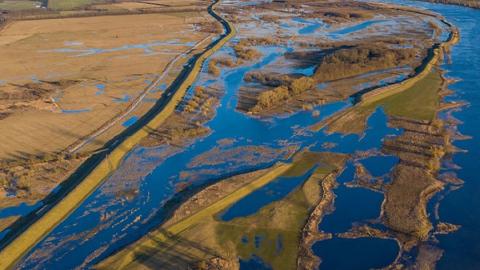
Pathways to ecological restoration in UNESCO Biosphere Reserve Elbe River Landscape
River restoration has emerged as a response to human modification of rivers, aiming to re-establish longitudinal and lateral connectivity, restore morphological dynamics, and recover ecosystem functions such as habitat provision, nutrient cycling, and flood regulation. This article examines the implementation or river restoration projects in the Elbe River Landscape Biosphere Reserve (Germany). Results show that largescale restoration is enabled by sustained funding, NGO engagement, and integrative governance, particularly through synergies between flood protection and floodplain restoration. However, structural constraints persist due to competing waterway management objectives and land-use conflicts. While restoration improves local ecological conditions and supports climate adaptation and mitigation, its spatial scale remains insufficient to counteract global biodiversity decline, underscoring the need for broader policy integration and systemic change.
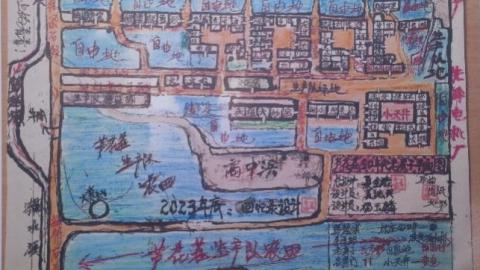
The River remembered twice: Museum and community narratives of Shanghai’s Waterways
This paper examines memory-making practices at Pengpu Local History Museum in Shanghai, a typical Chinese community museum characterised by government-led curation with limited resident participation. Drawing on Jan Assmann’s distinction between cultural memory and communicative memory, alongside François Hartog’s regimes of historicity, we analyse tensions between official narratives and oral histories of local residents with a focus on the waterways. The museum frames waterways as a symbolic cultural resource and ecological governance achievement for future-oriented cultural memory. By contrast, residents’ communicative memory preserves vivid lived experiences tied to pre-urban riverine life. Rather than simple opposition, cultural memory and communicative memory form a “reverberating” memory complex. This negotiation of past-present-future temporalities reveals distinctive features of community-based heritage practice in contemporary China.
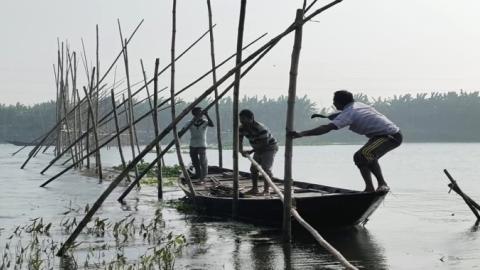
Civic mobilisation for polycentric river governance: The Save Jalangi West Bengal Movement became a river's voice
River degradation in India is examined chiefly through major rivers such as the Ganga, Yamuna, and Brahmaputra, while medium-sized rivers supporting agriculture, fisheries, wetlands, aquifer recharge, and cultural life receive far less scholarly and policy attention. The Jalangi River, a distributary of the Padma– Bhagirathi system, illustrates this neglect. Reduced headwater discharge, sedimentation, pollution, bank encroachment, destructive fishing, wetland disconnection, and groundwater stress have degraded its ecological condition and riparian livelihoods. This paper examines the emergence, strategies, achievements, and limitations of Save Jalangi West Bengal (SJWB), a citizen-led initiative established in 2019. Using a qualitative case-study approach, the study draws on participant observation, organisational records, administrative correspondence, 48 semi-structured interviews, and indigenous-knowledge mapping undertaken during 2019–2026. Findings indicate that SJWB has evolved from a civic response into a multiscalar socio-ecological platform promoting ‘river citizenship’ and influencing state action through illegal bandhal removal, eco-friendly idol immersion, floodplain litigation, infrastructure oversight, and Jalangi Divas. However, mobilisation has not produced basin-scale restoration. Interventions remain episodic, the Jalangi Action Plan lacks dedicated implementation funding, and headwater flow constraints persist amid inter-state hydro-politics. SJWB is therefore an ongoing experiment in polycentric, participatory river governance, offering transferable lessons for medium-river rejuvenation across the Global South.
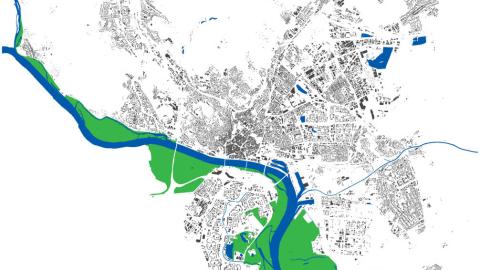
Building river partnerships from the ground up: the Bratislava Danube park as a case study of collaborative urban river restoration
Urban rivers are increasingly recognised as important natural systems that provide many benefits in addition to their traditional functions such as flood protection, navigation and water supply. Healthy rivers support biodiversity, improve climate resilience, provide opportunities for recreation and contribute to the quality of urban life (Hobbs et al., 2009) (Gann et al., 2026). Consequently, many European cities are investing in river restoration programmes that combine ecological improvements with public use of river corridors (Palmer et al., 2005) (European Commission, 2020) (European Parliament and Council of the EU, 2024). Experience shows that the main challenges of large urban river restoration programmes are often organisational as much as technical (Armitage et al., 2009) (Emerson & Nabatchi, 2015). The Bratislava Danube Park (BDP) provides an example of this process. From the beginning, the initiative was built around three complementary objectives: restoration of degraded river and floodplain ecosystems, reconnecting the city with the Danube through improved recreation and public access, and improving flood protection by restoring selected river-floodplain processes. The long-term vision was not to restore the entire floodplain, large parts of which retained its high ecological value, but to integrate conservation of existing natural habitats with restoration of selected degraded sections of the river-floodplain system as well as management of the urban floodplain landscape as a whole.